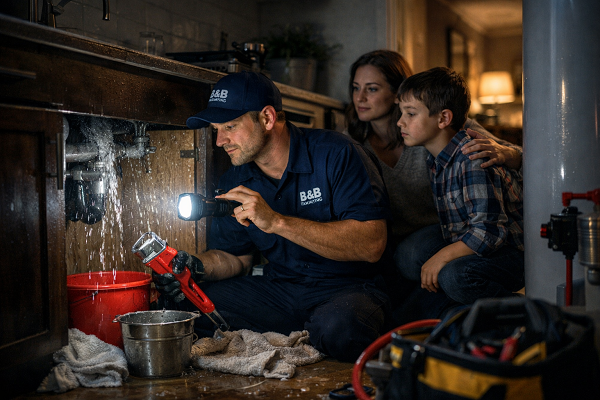
When a pipe bursts at midnight or sewage starts backing up into your tub, you don’t have time to Google “what now?” Emergency Plumbing support is all about fast decisions and faster action. At B&B Family Plumbing, we see how a few minutes can make the difference between a quick cleanup and thousands of dollars in damage, so this guide is here to help you know what counts as an emergency, what to do first, and how pros keep the situation under control.
What Really Counts as a Plumbing Emergency?
Not every drip or slow drain is an emergency, but some issues can’t wait. In general, it’s an emergency if:
- Water is actively flowing where it shouldn’t be
- There’s a risk of structural damage to floors, walls, or ceilings
- Sewage is backing up into your home
- There’s a safety risk, like a gas leak from a water heater
Common plumbing emergencies include:
- Burst or badly leaking pipes
- Major slab or ceiling leaks
- Overflowing toilets that won’t stop
- Sewage coming up through drains or tubs
- No water at all (especially if someone vulnerable lives in the home)
- Water heater leaks or strange noises that suggest a failure
If you’re asking, “Can this wait until tomorrow?” and you’re worried about damage or health risks, treat it like an emergency and call right away.
First Steps Homeowners Should Take (Before the Plumber Arrives)
When plumbing disasters strike, your first goal is simple: stop or slow the damage until help gets there.
1. Shut Off the Water
- Find the main water shutoff valve (often near the meter, a crawlspace, or where the main line enters the house).
- Turn it clockwise to shut off water to the whole home.
- For localized issues (like a single toilet or sink), use the fixture shutoff valve if you can safely reach it.
If you don’t know where your main shutoff is, now is a good time to find it—before something goes wrong.
2. Kill Power if Water Is Near Electricity
If water is dripping near outlets, appliances, or your breaker panel, avoid stepping into pooled water and do not touch electrical fixtures. If it’s safe and dry to do so, shut off power to the affected area from your panel. When in doubt, wait for help—your safety comes first.
3. Contain and Protect
- Use towels, buckets, and pots to catch drips.
- Move furniture, rugs, and valuables out of the wet area.
- Place foil or blocks under furniture legs to prevent water absorption.
These simple steps can dramatically reduce damage, mold risk, and insurance headaches later.
Rapid-Response Emergency Plumbing Services: What to Expect
When you call B&B Family Plumbing for emergency help, the goal is to stabilize first, repair second.
Here’s how a typical visit goes:
- Quick assessment
The plumber identifies the source of the problem and any immediate hazards (electrical, structural, sewage contamination).
- Stop the leak or backup
This might mean shutting off specific lines, capping a broken pipe, clearing a main drain clog, or temporarily bypassing a failed fixture.
- Temporary vs. permanent repair
- In many cases, the plumber can complete a permanent repair on the spot.
- If the damage is extensive, they’ll put in a safe temporary fix, then schedule follow-up work when parts, drywall, or additional access are needed.
- Damage and safety check
A good emergency plumber will also flag related concerns: soaked insulation, damaged ceilings, or areas that may need a water damage restoration company to step in.
For more on what to do if indoor flooding occurs, you can review the American Red Cross tips for home flooding and cleanup for health and safety guidance.
How Professional Plumbers Limit Damage
Fast response doesn’t just mean “show up quickly.” The right emergency plumbing team protects your home in several ways:
- Targeted isolation – Instead of leaving your whole house without water, they often isolate just the affected branch or fixture so you can use other parts of your plumbing.
- Correct diagnosis – They find the real cause, not just the symptom, so you don’t have repeat emergencies a week later.
- Right materials on the truck – A well-prepared plumber carries common pipe, fittings, valves, and tools to handle most emergencies in one visit.
- Clear communication – They explain what happened, what they fixed, and what you should watch for next.
This is where experience and training matter. A quick but sloppy repair can hide problems behind walls and create mold, leaks, or structural issues in the future.
Common Plumbing Disasters and How They’re Handled
Burst or Frozen Pipes
- Symptoms: Sudden water spraying, bulging ceilings, or a “rain” sound in walls.
- Emergency response: Shut off water, open faucets to relieve pressure, locate and repair or replace the damaged section, and check for other weak spots.
Sewage Backups
- Symptoms: Foul odors, sewage in tubs or floor drains, multiple fixtures backing up at once.
- Emergency response: Stop using water, clear the main sewer line, inspect for damage or root intrusion, sanitize affected areas, and advise on restoration if needed.
Overflowing Toilets and Fixtures
- Symptoms: Water spilling over the rim, gurgling, or backup after flushing.
- Emergency response: Shut off the toilet’s supply valve, clear clogs, inspect venting and main line, and test other fixtures to rule out broader blockages.
Water Heater Emergencies
- Symptoms: Leaking tank, no hot water, popping or banging noises, signs of rust or cracks.
- Emergency response: Shut off power/gas and water to the heater, evaluate whether repair or replacement is safest, and secure the area to prevent further leaks.
When to Call B&B Family Plumbing for Emergency Service
If you’re dealing with any of these, don’t wait and hope it gets better:
- Rapidly spreading water
- Sewage anywhere inside the home
- No water to the entire house
- Sudden, unexplained drops in water pressure
- Water stains that appear quickly or grow by the minute
At B&B Family Plumbing, we provide fast, professional emergency response with clear communication at every step. To see how emergency help fits into our full range of plumbing solutions, visit our emergency plumbing services page and save the number in your phone before you need it.
Be Prepared Before Disaster Strikes
You can’t prevent every plumbing emergency, but you can be ready:
- Learn where your main water shutoff valve is (and test it).
- Keep towels, buckets, and a basic toolkit in an easy-to-reach spot.
- Know which plumber you’ll call—don’t wait until you’re ankle-deep in water to start searching.
When plumbing disasters strike, a calm plan plus a reliable pro is your best defense. With B&B Family Plumbing on your side, you get fast response, honest advice, and repairs that focus on limiting damage now and preventing surprises later.