Copper vs PEX vs PVC: Choosing Piping Installation Materials for Your Home
December 1st, 2025
Table Of Contents
When you’re planning new plumbing or a remodel, the piping installation materials you choose will affect everything from water pressure to long-term maintenance costs. As a homeowner, it can feel overwhelming to compare copper, PEX, and PVC on your own. At B&B Family Plumbing, we walk families through this choice every day so they can feel confident in how their home is built and protected.
In this guide, we’ll break down how each material works, where it performs best, and practical factors like cost, lifespan, and safety so you can decide what makes sense for your home.
Why Your Piping Material Choice Matters
Pipes are mostly hidden behind walls and under floors, but they do a lot of heavy lifting:
Carrying clean water to fixtures
Removing wastewater safely
Withstanding pressure, heat, and daily use
Protecting your home from leaks and water damage
Choosing the right material isn’t about picking “the best pipe ever.” It’s about choosing the right pipe in the right place for your home, budget, and local building codes. That’s where a licensed plumber like B&B Family Plumbing becomes your guide and not just your installer.
Copper Piping: The Long-Time Standard
Copper has been the gold standard in residential plumbing for decades, and many older homes still rely heavily on copper water lines.
Pros of Copper:
Very durable and long-lasting – Copper can last 50+ years when properly installed.
Heat and pressure resistant – Great for hot water lines and areas with high water pressure.
Naturally corrosion-resistant – Less likely to get brittle or crack over time.
Fire resistant – Copper doesn’t melt or burn, which can be a plus for safety.
Cons of Copper:
Higher cost – Material and labor costs are typically higher than PEX or PVC.
Can be noisy – Copper can “bang” or “knock” when water turns on and off quickly (water hammer).
Sensitive to water chemistry – Very acidic water can slowly corrode copper from the inside.
Best Uses for Copper:
Main water supply lines inside the home
Hot water lines near water heaters
Homes where long-term durability is a priority and the budget allows
If you want a proven material that can stand the test of time, copper is a strong contender—especially when installed and supported correctly by a pro.
PEX Piping: The Flexible Modern Option
PEX (cross-linked polyethylene) is a flexible plastic pipe that has become extremely popular in newer homes. It’s often recognized by its red, blue, or white tubing.
Pros of PEX:
Flexible and easy to install – Fewer fittings and connections mean fewer potential leak points.
Typically more affordable than copper – Both materials and labor often cost less.
Resistant to freeze damage – PEX can expand slightly if water inside freezes, helping prevent burst pipes.
Quiet operation – Less likely to create loud banging noises in the walls.
Cons of PEX:
Sensitive to UV light – PEX can break down if exposed to direct sunlight, so it must be kept indoors or covered.
Not always allowed everywhere – Some older local codes may limit where and how PEX can be used.
Can be damaged by rodents – In rare cases, rodents may chew on plastic piping.
Best Uses for PEX:
Whole-home water distribution systems
Remodels where fishing flexible pipe through existing walls is beneficial
Homes in colder climates where freeze resistance is helpful
PEX is often a great choice for homeowners who want a modern, efficient system that balances performance and cost.
PVC Piping: Reliable for Drains and Vents
PVC (polyvinyl chloride) is a rigid white plastic pipe most commonly used for drain, waste, and vent (DWV) systems rather than pressurized drinking water lines inside the home.
Pros of PVC:
Cost-effective – Generally cheaper than copper and often less than PEX for similar drain work.
Corrosion-free – Won’t rust like metal pipes.
Smooth interior – Helps wastewater flow easily and reduces buildup in drains.
Lightweight and easy to cut – Makes installation simpler in many cases.
Cons of PVC:
Not ideal for hot water supply lines – High heat can weaken PVC pipes and joints.
Can become brittle over time in extreme temperatures – Especially if exposed outdoors without protection.
Limited to certain uses by code – Typically used for DWV, not always for pressurized potable water inside the home.
Best Uses for PVC:
Main drain lines and branch drain lines
Vent piping through walls and roofs
Certain exterior or underground applications, depending on code
PVC is a workhorse for moving wastewater safely away from your home. When paired with proper slope and venting, it keeps drains flowing and odors out.
Head-to-Head Comparison: Copper vs PEX vs PVC
Here’s how these three piping installation materials stack up in everyday homeowner terms:
Cost
Lowest: PVC (for drains)
Mid-range: PEX (for water supply)
Highest: Copper
Lifespan
Copper: 50+ years
PEX: 30–50 years when installed and protected properly
PVC: 25–40+ years in drain and vent systems
Typical Use
Copper: Pressurized hot and cold water supply lines
PEX: Whole-home water supply, remodels, repiping projects
PVC: Drains, waste, and vent piping
Installation Speed
Fastest: PEX (thanks to flexibility and fewer fittings)
PVC: Moderate (cut, glue, and fit)
Copper: Slowest (requires cutting, cleaning, soldering or specialized fittings)
How to Choose the Right Material for Your Home
Every home is different, but here are key questions B&B Family Plumbing helps you answer:
What’s your budget? If you’re looking for a cost-effective whole-home solution, PEX and PVC (for drains) often provide excellent value.
Are you remodeling or building new? In remodels, PEX flexibility makes it easier to work in tight spaces. In new construction, you may choose a combination of copper, PEX, and PVC depending on the location.
What do local building codes allow? Not every material can be used everywhere in the same way. A licensed plumber will ensure your system passes inspection and keeps you compliant.
How long do you plan to stay in the home? If this is your “forever” home, you may prioritize long-term durability and invest more in certain areas.
Do you have special concerns? For example, if your area has very hard or acidic water, or if you’ve had freeze issues in the past, that can influence the mix of materials we recommend.
You can learn more about our installation options and how we design systems around your family’s needs on our piping installation services page.
Work with a Plumber Who Looks at the Big Picture
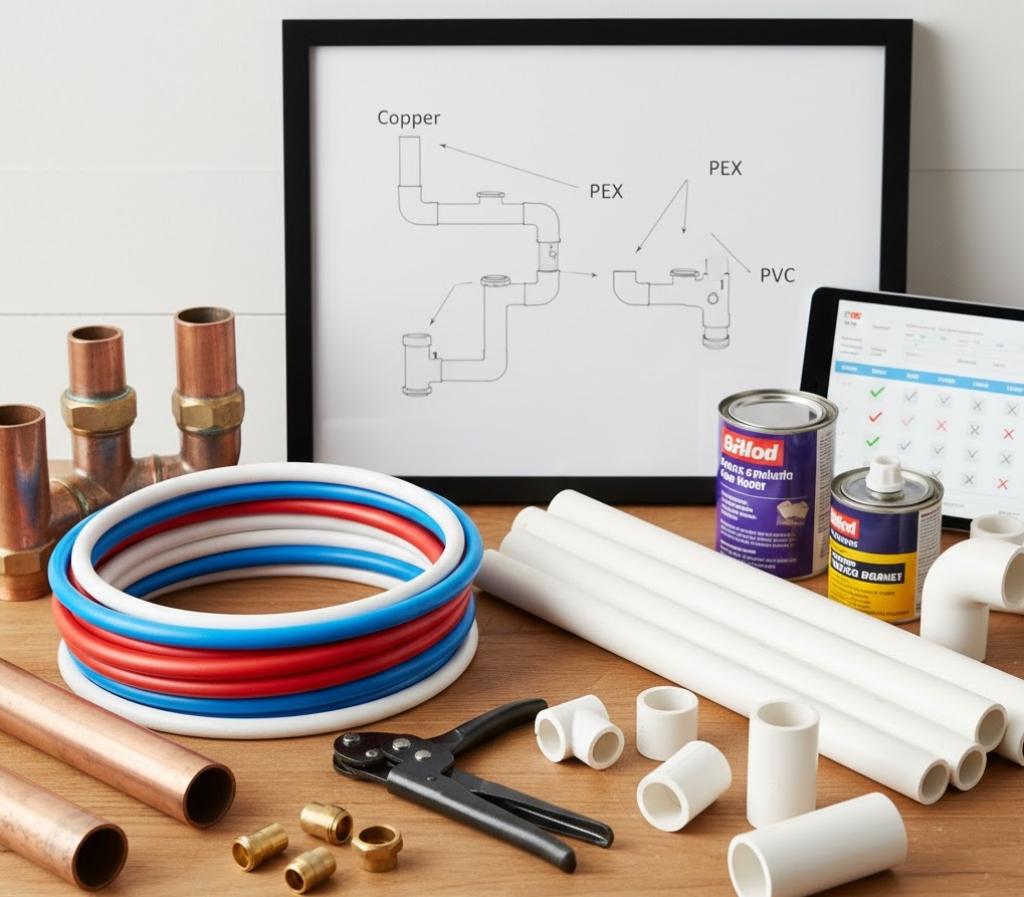
In many homes, the smartest solution is a combination of copper, PEX, and PVC:
Copper where heat and pressure are highest
PEX for efficient, flexible water distribution
PVC for reliable, long-lasting drains and vents
At B&B Family Plumbing, we don’t push one “favorite” material. We look at your home, your budget, your water quality, and your future plans. Then we design a system with the piping installation materials that make the most sense for you—so you get safe, dependable plumbing for years to come.
If you’re planning a remodel, new build, or repipe and aren’t sure which pipes you should choose, reach out to B&B Family Plumbing. We’ll walk you through your options in plain language and give you clear recommendations so you can feel confident before any work begins.