
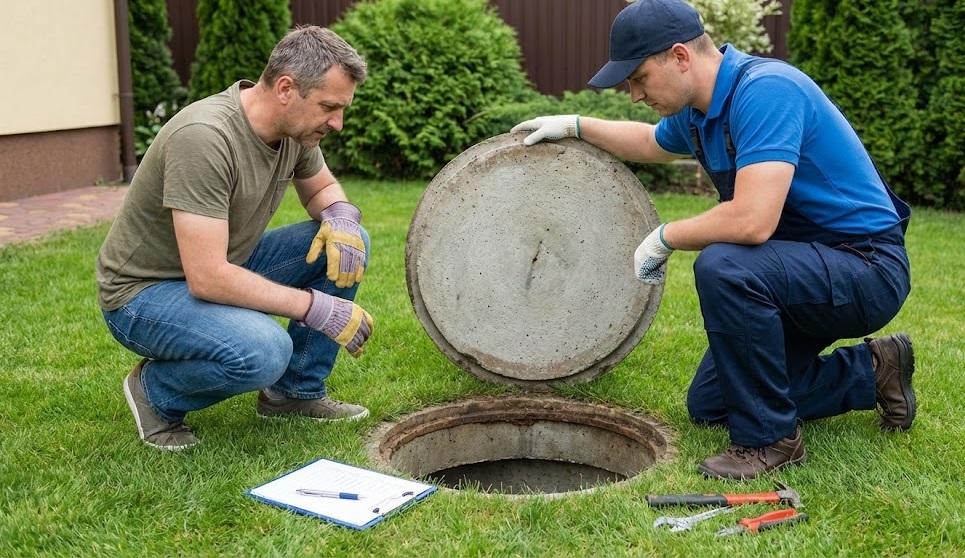
If your home uses a septic tank, septic system maintenance is just as important as roof or HVAC maintenance—maybe more. When septic systems are ignored, they don’t just smell bad; they can contaminate groundwater, damage your yard, and cost thousands of dollars to fix or replace. At B&B Family Plumbing, we’ve seen both sides: well-maintained systems that last for decades and neglected systems that fail long before their time.
This homeowner’s guide will walk you through how your septic system works, simple maintenance habits, warning signs of trouble, and when to call a professional.
A standard septic system has three main parts:
Wastewater from toilets, sinks, showers, and laundry flows into the septic tank. Heavy solids sink to the bottom as sludge, fats and grease form a scum layer on top, and the liquid in the middle flows out into the drain field. There, soil and natural bacteria remove harmful germs and nutrients before the water returns to the ground.
When any part of this process breaks down—too much water, too many solids, clogged pipes, or compacted soil—the system can fail.
You might go years without thinking about your septic system, but that doesn’t mean nothing is happening underground. Here’s why maintenance matters:
The EPA sums it up simply: septic system maintenance isn’t complicated, and it doesn’t have to be expensive when you stay on top of the basics.
The single most important task is regular inspection and pumping.
If you have pumps, filters, or other mechanical parts, you may need yearly inspections.
During a pumping visit, the technician will:
Think of this like an oil change for your septic system—cheap insurance against major breakdowns.
Every drop of water leaving your home ends up in your septic system. Too much water too quickly can overload the tank and flood the drainfield.
Simple ways to protect your system:
Reducing water use lowers stress on your septic system and reduces the chance of backups.
Your septic system is not a trash can. It’s designed for:
That’s it.
Do NOT flush or pour down drains:
These materials either don’t break down, clog pipes, or kill the helpful bacteria that your system needs to work properly.
Your drainfield is where final treatment happens. If it fails, the entire system suffers.
Good drainfield habits:
If the drainfield gets compacted or continually saturated with water, it can stop filtering properly and send wastewater to the surface.
Catching problems early is a key part of septic system maintenance. Call a professional if you notice:
These signs don’t always mean complete failure, but they do mean you need expert help right away.
A simple file or folder can save you headaches later. Keep:
Good records help B&B Family Plumbing (or any future plumber) understand your system’s history and make better recommendations.
Septic systems look simple from the surface, but diagnosing issues often requires experience and specialized tools. That’s where B&B Family Plumbing comes in.
We can help you:
To see how septic care fits into our full plumbing services, visit our septic system services page and learn how we can help you keep your system in top shape.
For more in-depth background from a national source, you can also explore the EPA’s “How to Care for Your Septic System” guide, which shares simple, research-based tips for homeowners.
You don’t need to obsess over your septic tank—but you do need a plan:
With a few smart habits and a reliable partner like B&B Family Plumbing, your septic system can do its job quietly and safely for years to come.
Monday – Friday 8 AM–5 PM
Saturday 8 AM–3 PM
Sunday Closed