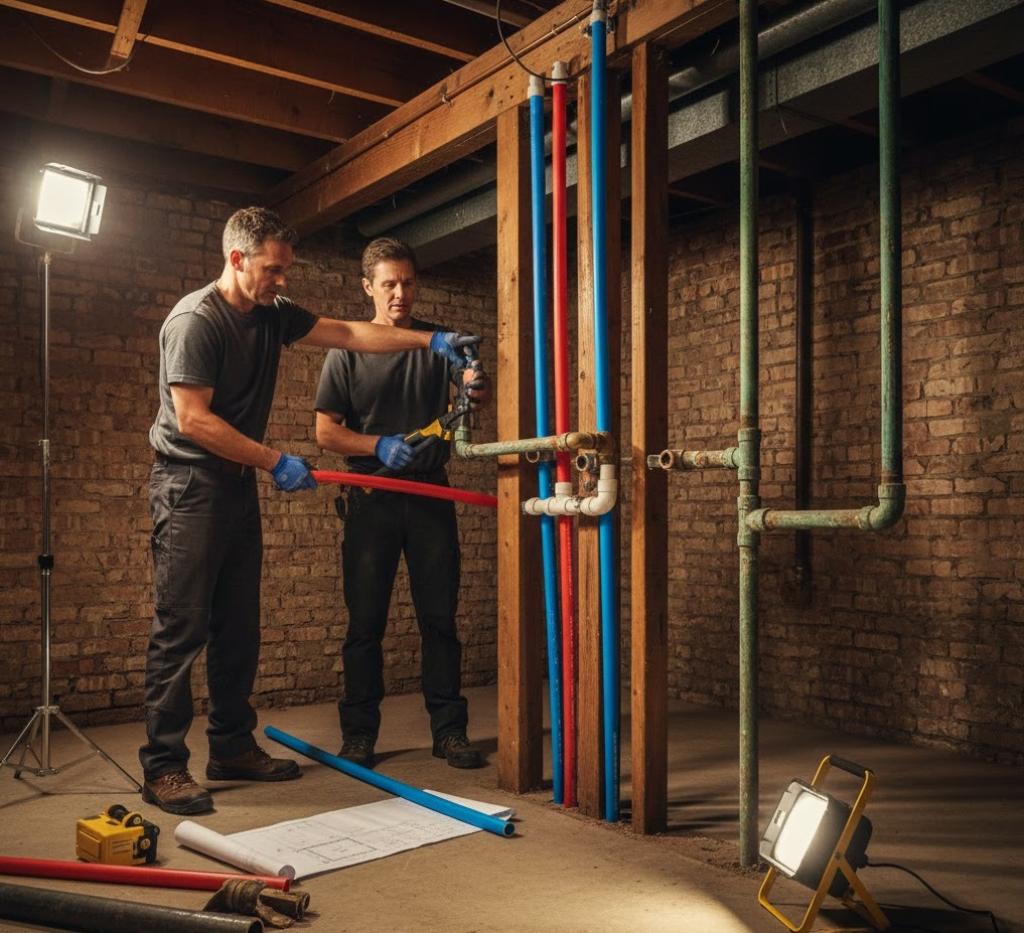
Repiping Older Homes: Special Piping Replacement Considerations for Aging Plumbing
December 15th, 2025
Table Of Contents
Repiping older homes can feel intimidating, especially if you’re worried about cost, disruption, or hidden problems in your walls. But repiping older homes is often the safest way to protect your property from leaks, water damage, and health risks. In this guide, B&B Family Plumbing explains the unique challenges of aging plumbing, what to expect from the process, and how to plan a successful repipe.
Why Older Homes Often Need Repiping
If your home is 30, 40, or 50+ years old, the original plumbing was installed under very different building codes and standards. Materials that were “normal” back then can now be:
At the end of their service life
Corroded or rusted from the inside
Unsafe by today’s plumbing and health standards
Common reasons older homes need repiping include:
Frequent leaks and emergency repairs
Discolored or rusty-looking water
Low water pressure throughout the house
Water with a metallic or foul taste
Old pipe materials like galvanized steel or polybutylene
At some point, constant small fixes stop making sense. Full or partial repiping becomes the more reliable, long-term solution.
Common Old Pipe Materials and Their Problems
Every older home is different, but many share similar pipe issues:
Galvanized Steel
Galvanized steel was widely used decades ago. Over time, it corrodes from the inside:
Reduces water pressure as the pipe diameter slowly closes
Causes rusty or discolored water
Increases the risk of leaks and bursts
Polybutylene
Polybutylene was popular in the 1970s–1990s but later became known for premature failures:
Prone to cracking and sudden leaks
Sensitive to chemicals in treated water
Often recommended for full replacement, not patch repairs
Old Copper
Copper can last a long time, but older copper systems can still develop:
Pinhole leaks from internal corrosion
Solder joints that fail
Past DIY modifications that don’t meet current code
When B&B Family Plumbing inspects an older home, we look at the age, condition, and material of pipes to help you decide whether targeted repairs or a full repipe is the smarter choice.
Special Considerations When Repiping Older Homes
Repiping an older house is not the same as working on new construction. There are unique factors that must be handled carefully.
1. Accessing Pipes Behind Finished Surfaces
Older homes often have:
Plaster walls instead of drywall
Tighter crawl spaces or none at all
Complex framing and layout
A good plumbing team plans access points strategically to:
Minimize wall and ceiling cuts
Protect trim, tile, and finishes where possible
Coordinate with you (and any other trades) for repairs after the plumbing work is done
2. Working Around Lead, Asbestos, and Other Hazards
Some older homes contain legacy building materials that require extra care:
Asbestos in insulation or old floor tiles
Lead in solder, pipes, or paint
B&B Family Plumbing can help spot potential issues and coordinate with qualified professionals when specialized remediation is needed, so your repiping project stays safe and compliant.
3. Updating to Modern Codes and Standards
Repiping is also an opportunity to bring your plumbing up to current code. That may include:
Correctly sized supply lines for better pressure
Proper venting to prevent slow drains and sewer gas
Upgraded shutoff valves and pressure regulators
Properly secured and supported pipes
These upgrades make your system safer, more efficient, and easier to service in the future.
Whole-Home Repiping vs. Partial Repiping
You don’t always have to repipe the entire house, but in many older homes it’s the most cost-effective long-term choice.
Whole-Home Repiping
Best when:
Most or all pipes are the same old material
Leaks and corrosion are widespread
You plan to stay in the home long term
Benefits:
Consistent, reliable water quality and pressure
A clean “reset” for the entire plumbing system
Fewer surprise leaks and emergency calls
Partial Repiping
May be appropriate when:
Problems are isolated to specific areas
Some sections have already been updated
Budget or timing limits full repiping right now
B&B Family Plumbing can walk you through the pros and cons of each option based on your home, goals, and budget.
What to Expect During a Repiping Project
Understanding the process makes it much less stressful. A typical repiping project for an older home includes:
Inspection and Planning
Evaluate existing pipes, fixtures, and access points
Discuss your concerns (low pressure, rusty water, past leaks)
Plan pipe routes, shutoff locations, and fixture connections
Shutoff and Protection
Turn off water supply at agreed times
Protect floors and furniture with drop cloths
Set expectations about water outages during the project
Opening Access Points
Cut small, planned holes in walls or ceilings
Use existing chases and openings where possible
Installing New Pipes
Run new supply lines and, if needed, new drain or vent lines
Use durable, code-approved materials matched to your home’s needs
Label and organize lines for future service and repairs
Testing and Flushing
Pressurize the system and check for leaks
Flush lines to remove debris and air
Verify water temperature, pressure, and flow at all fixtures
Clean-Up and Patch Coordination
Remove old materials and job debris
Coordinate with you or a contractor for drywall and paint repairs
Walk through the project with you and answer questions
Benefits of Repiping an Older Home
When done correctly, repiping is a long-term investment in your home:
Fewer leaks and emergencies – Less risk of sudden pipe failures
Better water quality – Reduced rust, sediment, and metallic tastes
Improved water pressure – Properly sized and clean new pipes
Higher home value – Buyers appreciate updated plumbing systems
Peace of mind – You’re not waiting for the “next big leak” to happen
An experienced team like B&B Family Plumbing helps you get these benefits while minimizing disruption and keeping you informed at every step.
How B&B Family Plumbing Can Help
Repiping is a big project, but you shouldn’t have to navigate it alone. B&B Family Plumbing can:
Inspect your existing plumbing and explain your options in plain language
Recommend whole-home or partial repiping based on real numbers, not pressure
Coordinate scheduling so you’re never surprised by water shutoffs
Provide clear estimates and timelines before work begins
Repiping older homes isn’t just about replacing pipes—it’s about protecting your home, health, and peace of mind. With careful planning, code-compliant materials, and a skilled plumbing team, you can transform an aging, unreliable system into one that’s safe, efficient, and ready for decades of use.
If you’re seeing recurring leaks, rusty water, or low pressure in an older property, contact B&B Family Plumbing to discuss whether repiping is the right next step.