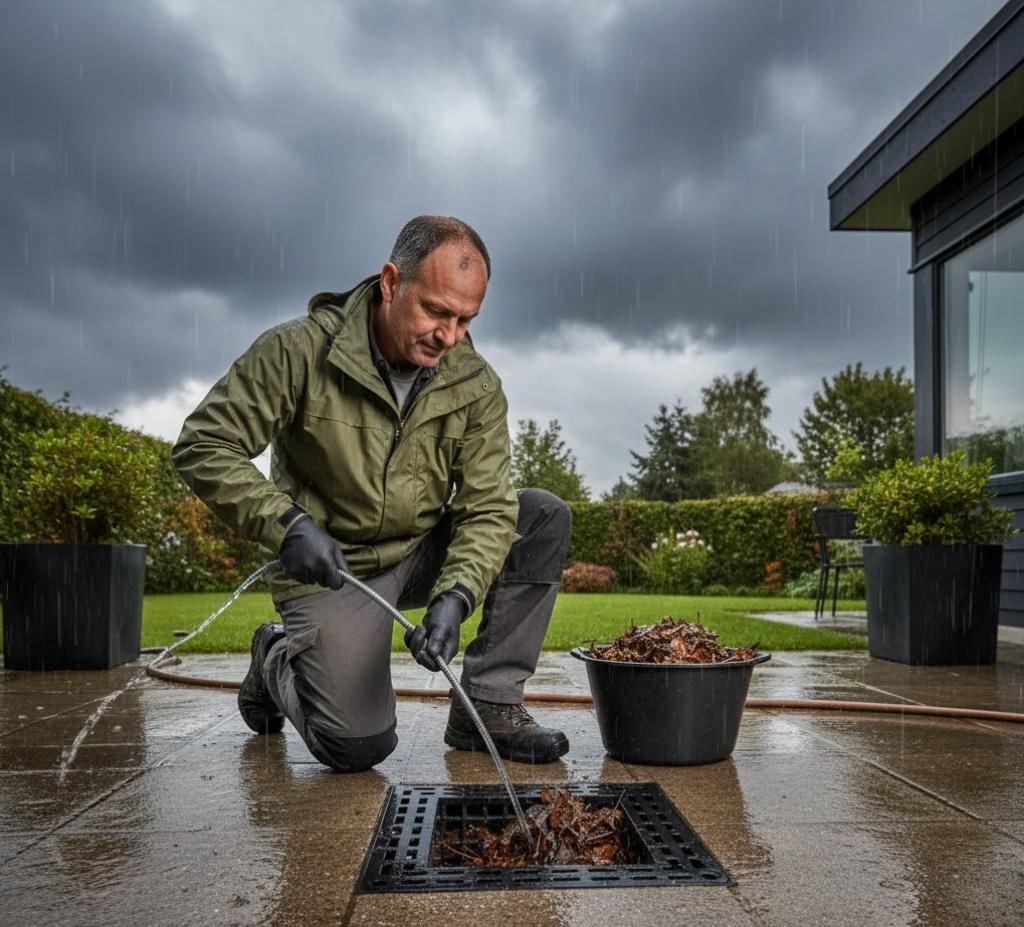
When you think about outdoor drain clearing, it’s usually because water is already pooling in your yard or creeping toward your back door. At that point, you’re in panic mode and trying anything to get the water moving. The better approach is to get ahead of the problem and keep your yard and patio drains ready long before the next big storm. That’s exactly what B&B Family Plumbing helps homeowners do every day.
In this guide, we’ll walk through why outdoor drains clog, how you can clear them safely, and when it’s time to bring in a professional.
Why Yard and Patio Drains Matter So Much in Heavy Rain
Yard, patio, and driveway drains are easy to ignore—until they stop working.
These drains are there to:
- Move stormwater away from your foundation
- Prevent puddles that kill grass and plants
- Keep patios, walkways, and driveways safe and usable
- Reduce the risk of water getting into basements or crawl spaces
When those drains are clogged, heavy rain has nowhere to go. That’s when you see:
- Standing water in low spots of the yard
- Water backing up onto the patio or driveway
- Muddy, slippery walkways
- Moisture problems inside the home, like musty smells or damp walls
Healthy drains mean less stress every time you see a storm in the forecast.
Common Causes of Clogged Outdoor Drains
Most outdoor drain problems build up slowly. Here are the usual suspects:
- Leaves and yard debris – Fall leaves, grass clippings, mulch, and twigs are the main culprits.
- Dirt and sediment – Over time, soil washes into the grates and settles in the pipes.
- Tree roots – Roots search for water and can invade older drain lines through tiny cracks or joints.
- Improper grading – If the ground doesn’t slope correctly toward the drains, water sits and brings more debris with it.
- Old or damaged piping – Collapsed, cracked, or misaligned pipes make it easy for clogs to form and hard for water to move through.
Knowing what you’re up against helps you decide whether this is a DIY job or time to call B&B Family Plumbing.
Step-by-Step: How to Clear a Clogged Outdoor Drain
You can handle some outdoor drain clearing on your own, especially if the problem is near the surface. Here’s a simple process to follow.
1. Start at the Surface
- Remove the drain grate or cover.
- Clear away leaves, mulch, and visible debris by hand or with a small hand shovel.
- Rinse the area with a garden hose to see if water starts to move more freely.
Sometimes, the clog is just at the grate, and this is all you need.
2. Try a Basic Flush
If the water still drains slowly:
- Use a garden hose with a strong stream setting.
- Feed the hose into the drain opening and run water for several minutes.
- Watch the water level: if it starts backing up quickly, the clog is deeper in the line.
3. Use a Drain Snake (If You Have One)
For tougher clogs:
- Use a manual or powered drain snake sized for outdoor drains.
- Slowly feed it into the drain until you feel resistance.
- Rotate and work the snake back and forth to break up or pull out the blockage.
- Bring it back out carefully—there may be sludge, roots, or compacted debris on the end.
If your snake hits a hard stop or gets stuck, that’s a sign of a bigger issue like a collapsed line or heavy root intrusion.
4. Rinse Thoroughly
After you’ve broken up the clog:
- Flush the drain again with the hose.
- Check multiple points in your yard or patio to confirm water is flowing out where it should.
If you still see slow draining or backups, it’s time for professional help.
When to Call a Professional Plumber for Outdoor Drain Clearing
DIY is fine for minor clogs, but there are clear red flags that you need a pro like B&B Family Plumbing:
- Water repeatedly backs up, even after you clear the grate
- You see standing water near the foundation after storms
- Multiple drains in the yard or patio aren’t working
- You suspect tree roots in your drain lines
- There are signs of damage, like sinkholes or soft spots in the lawn
A professional plumber can:
- Use drain cameras to see exactly where and what the problem is
- Jet-clean the lines to remove sludge, sediment, and roots
- Repair or replace damaged outdoor drain piping
- Recommend grading or drainage improvements if needed
For more background on why proper stormwater handling matters, you can also review EPA stormwater management guidance as a helpful reference.
Preventive Maintenance: Keep Drains Ready Before the Storm
The best time to think about outdoor drains is before they’re flooded. Here’s a simple maintenance checklist you can follow:
- Clean the grates every season
Remove leaves, sticks, and trash from drain covers at least once per season, and more often during fall.
- Trim nearby plants and trees
Reduce the amount of debris falling directly into the drains.
- Avoid blowing yard waste toward drains
When mowing or using a blower, aim clippings away from patios and drain openings.
- Check for slow draining after light rain
Light rain gives you a chance to spot early warning signs before a big storm hits.
- Schedule routine professional drain cleaning
A yearly visit to inspect and clear your outdoor drains can save you from costly water damage and emergency calls.
For homeowners who want a more thorough solution, B&B Family Plumbing can include your yard drains as part of regular professional drain clearing services so you’re always prepared for the next downpour.
How B&B Family Plumbing Helps Protect Your Home from Heavy Rain
When you call B&B Family Plumbing about outdoor drain issues, you’re not just getting someone to clear a clog—you’re getting a team that looks at the whole picture:
- Where the water is coming from
- How your yard is graded
- How your downspouts, French drains, and yard drains work together
- Whether your drain lines are sized and installed correctly
From there, we can recommend:
- Simple cleaning and maintenance
- Upgrades to your existing drain system
- Repairs or replacements of damaged drain lines
- Solutions to keep water away from your home’s foundation
The goal is always the same: less stress when storms roll through and more confidence that your yard, patio, and home are protected.
Final Thoughts: Don’t Wait for the Next Big Storm
Outdoor drain clearing isn’t just a one-time chore—it’s part of protecting your home from water damage year-round. A few simple habits, plus occasional professional maintenance, can make the difference between a passing storm and a flooded patio or waterlogged foundation.
If you’ve noticed slow-draining yard or patio drains, standing water after rain, or you just want peace of mind before storm season, B&B Family Plumbing is ready to help.
Stay ahead of the weather, not behind it.