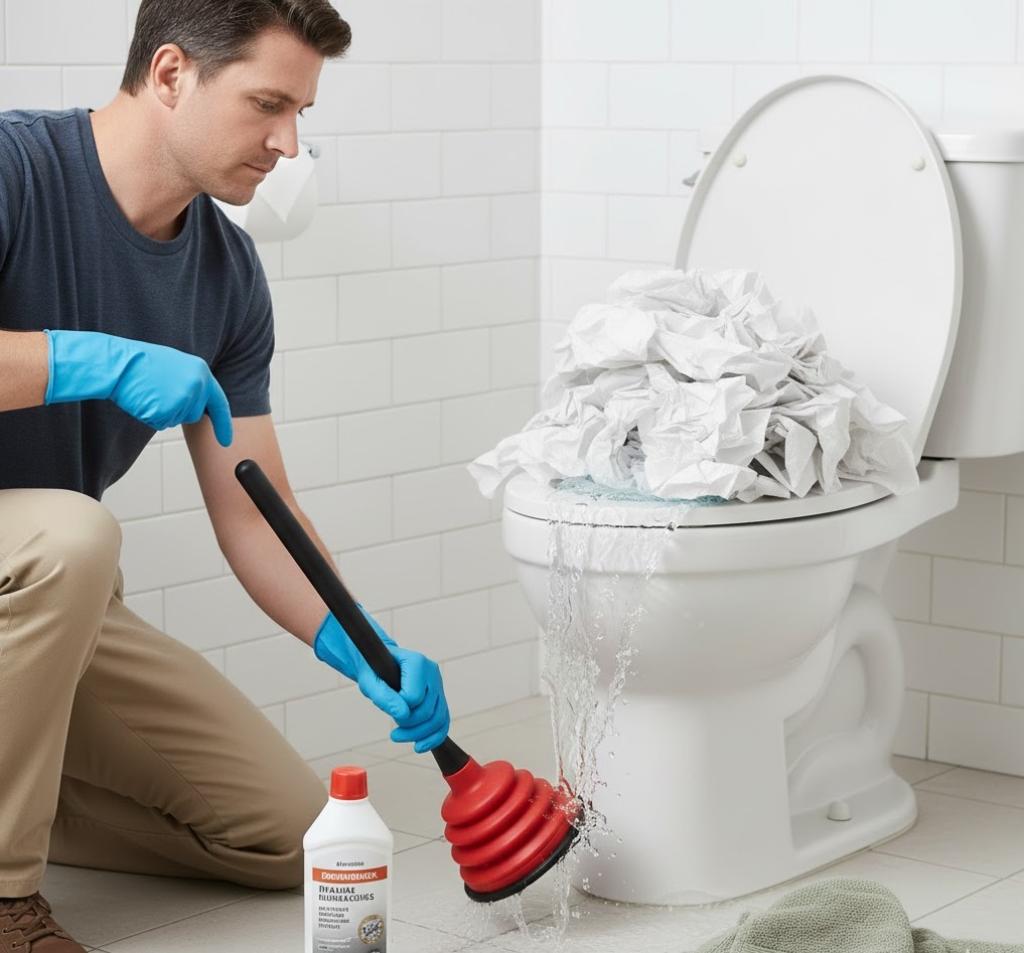
Toilet paper is usually designed to break down in water, but too much at once can overwhelm your plumbing. When that happens, many homeowners start searching for clog drain clearing solutions they can try before calling a plumber. In this guide, B&B Family Plumbing walks you through safe, simple ways to clear an overloaded toilet, what to avoid, and when it’s time to get professional help.
Why Toilet Paper Clogs Happen
Even if you “only flushed toilet paper,” several things can lead to a stubborn clog:
- Too much paper in one flush
- Low-flow toilets that don’t move enough water
- Older pipes with rough interiors that catch debris
- Partial clogs deeper in the line that toilet paper sticks to
Understanding the cause helps you pick the safest method and avoid damaging your toilet or pipes.
First Step: Stop the Overflow
Before you do anything else, prevent a messy overflow.
- Don’t flush again.
A second flush often sends more water onto the floor.
- Shut off the water supply.
Look for the valve on the wall behind or beside the toilet and turn it clockwise to stop the flow.
- Let the water level settle.
If it’s near the rim, wait a few minutes before starting any clog removal methods.
Method 1: Use a Plunger (The Right Way)
A plunger is still one of the safest and most effective tools for toilet paper clogs—if you use it correctly.
- Choose the right plunger.
Use a flange plunger (the kind with a rubber sleeve that folds out on the bottom), not a flat sink plunger.
- Get a good seal.
Make sure the plunger covers the hole at the bottom of the bowl completely and is submerged in water. Add water if needed.
- Plunge with steady, strong motions.
Push down gently at first to release air, then use firm back-and-forth motions. Keep the seal tight so the force moves the clog, not just air bubbles.
- Check the water level.
After 15–20 plunges, lift the plunger and see if the water starts draining. If it does, try a single test flush.
If the clog doesn’t move after a few cycles of plunging, move to the next method.
Method 2: Hot (Not Boiling) Water and Dish Soap
For toilet paper-only clogs, hot water and soap can help break things down.
- Add dish soap.
Squirt a few tablespoons of mild dish soap into the bowl. It helps lubricate and loosen the paper.
- Heat water safely.
Fill a bucket with hot tap water or water heated on the stove—warm to hot, but not boiling. Boiling water can crack a cold toilet bowl.
- Pour from waist height.
Pour the water into the bowl from a couple of feet up to add a bit of extra force (but not so hard that it splashes everywhere).
- Wait 10–15 minutes.
The combination of heat and soap can help the toilet paper break down.
- Try plunging again.
After soaking, repeat the plunger method. Many toilet paper clogs clear at this point.
Method 3: Toilet Auger for Stubborn Clogs
If plunging and hot water don’t work, a toilet auger (also called a closet auger) is the next safe DIY option.
- Use a toilet-safe auger.
These are designed to protect the porcelain and reach deeper into the trap of the toilet.
- Insert the auger gently.
Feed the tip into the bowl opening and crank the handle to extend the cable down into the drain.
- Break up or hook the clog.
Turn the handle steadily—don’t force it. You’re trying to break up or grab the wad of toilet paper.
- Retract and test.
Pull the cable back, then try flushing once. If the water still doesn’t drain properly, you may have a deeper blockage in the line.
If you’re unsure about using an auger or you’re worried you might scratch the toilet, this is a good point to call B&B Family Plumbing for professional help.
What NOT to Do When Clearing Toilet Paper Clogs
Some quick “hack” ideas online can actually damage your plumbing. Avoid these when dealing with toilet paper clogs:
- Don’t use harsh chemical drain cleaners.
Many chemicals are designed for sinks, not toilets. They can damage the finish, warp plastic parts, or linger in the bowl—creating a hazard when you need to plunge later.
- Don’t flush foreign objects to “push it through.”
Throwing in more paper, wipes, or other items only adds to the clog.
- Don’t keep flushing repeatedly.
Multiple flushes just risk overflow and water damage.
If you want to read more about what should and shouldn’t go down toilets and drains, check a trusted resource like this wastewater system overview.
When to Call a Professional Plumber
DIY methods are great, but they don’t solve every problem. Call a licensed plumber like B&B Family Plumbing if:
- The toilet backs up frequently, even after you clear it
- Multiple drains in the home are slow or backing up
- You hear gurgling sounds from other fixtures when you flush
- You notice sewage smells or water around the base of the toilet
These can be signs of a deeper blockage in your main line or a problem with tree roots, collapsed pipes, or buildup that requires professional equipment.
If your clog turns out to be more than just toilet paper, a professional drain cleaning service can clear the line safely and thoroughly.
How to Prevent Toilet Paper Clogs in the Future
A few simple habits can drastically reduce the chances of another clogged toilet:
- Use less paper per flush.
Teach kids (and remind adults) that they can flush more than once rather than overloading the bowl.
- Avoid “flushable” wipes and bulky products.
Many items labeled “flushable” don’t break down like toilet paper and can cause stubborn clogs.
- Choose the right toilet paper.
Extra-thick, ultra-plush paper can be harder on older plumbing. A softer, faster-dissolving brand may be a better fit.
- Have older plumbing inspected.
If you live in an older home and deal with frequent clogs, B&B Family Plumbing can inspect your drains and piping for damage, corrosion, or improper slope.
Need Help with a Stubborn Toilet Paper Clog?
Toilet paper clogs are common, but they don’t have to be a disaster. With a plunger, some patience, and the right safe methods, many homeowners can clear basic clogs on their own. When the clog doesn’t budge—or when you suspect a bigger problem—B&B Family Plumbing is ready to help.
From simple toilet backups to more complex drain issues, our licensed plumbers can diagnose the problem quickly and use professional-grade tools to restore proper flow without risking damage to your toilet or pipes.